ShifaOne, Mobile Healthcare UX Flow
A mobile-first health experience simplifying record management, AI-assisted insights, and patient empowerment.
Client
ShifaOne
Industry
HealthTech / Digital Healthcare
Timeline
6 Months
Technologies
Figma
Project Overview
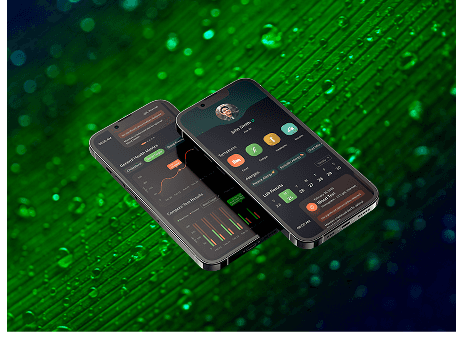
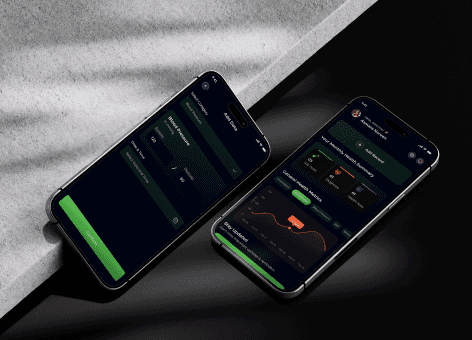
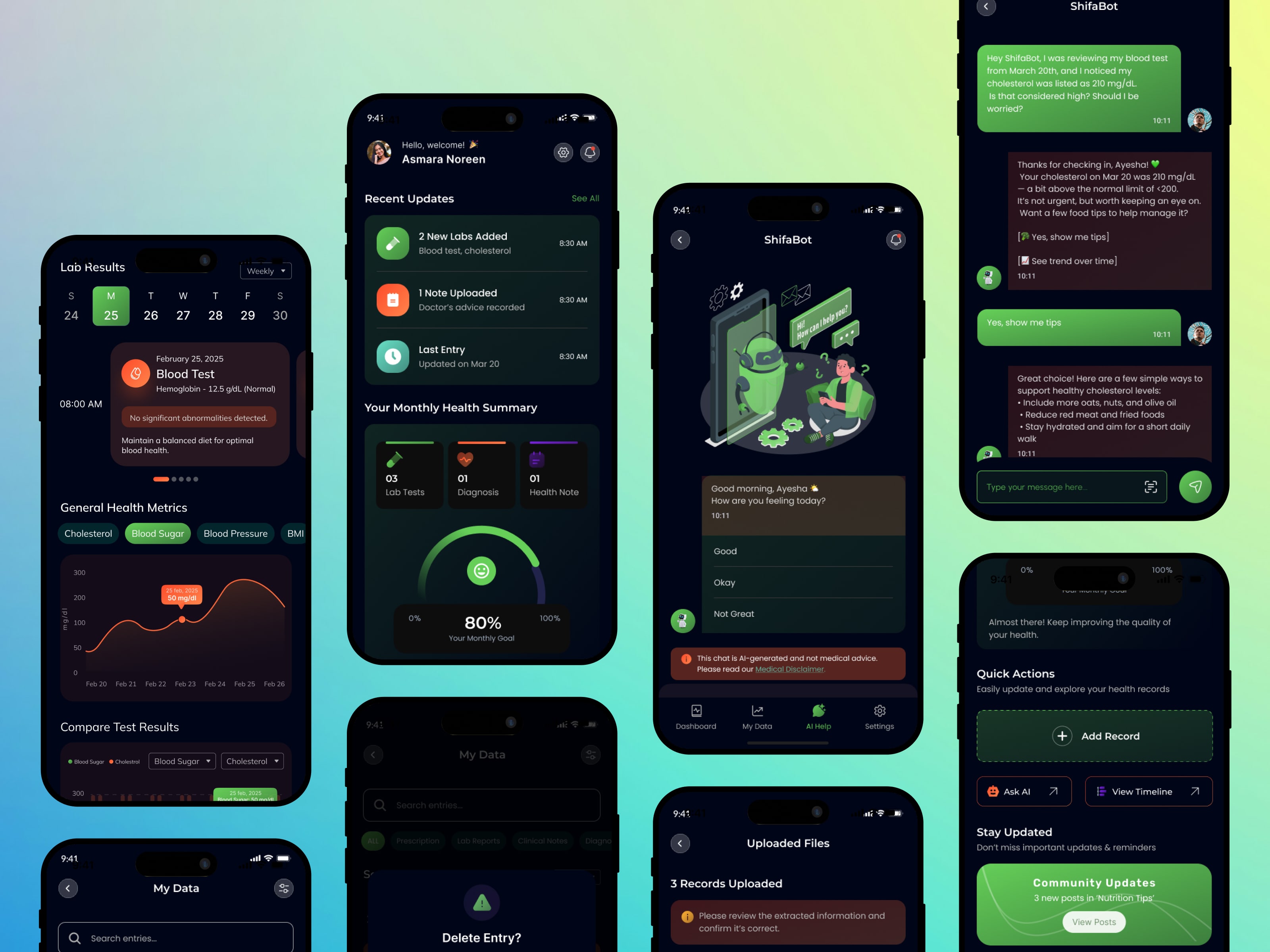
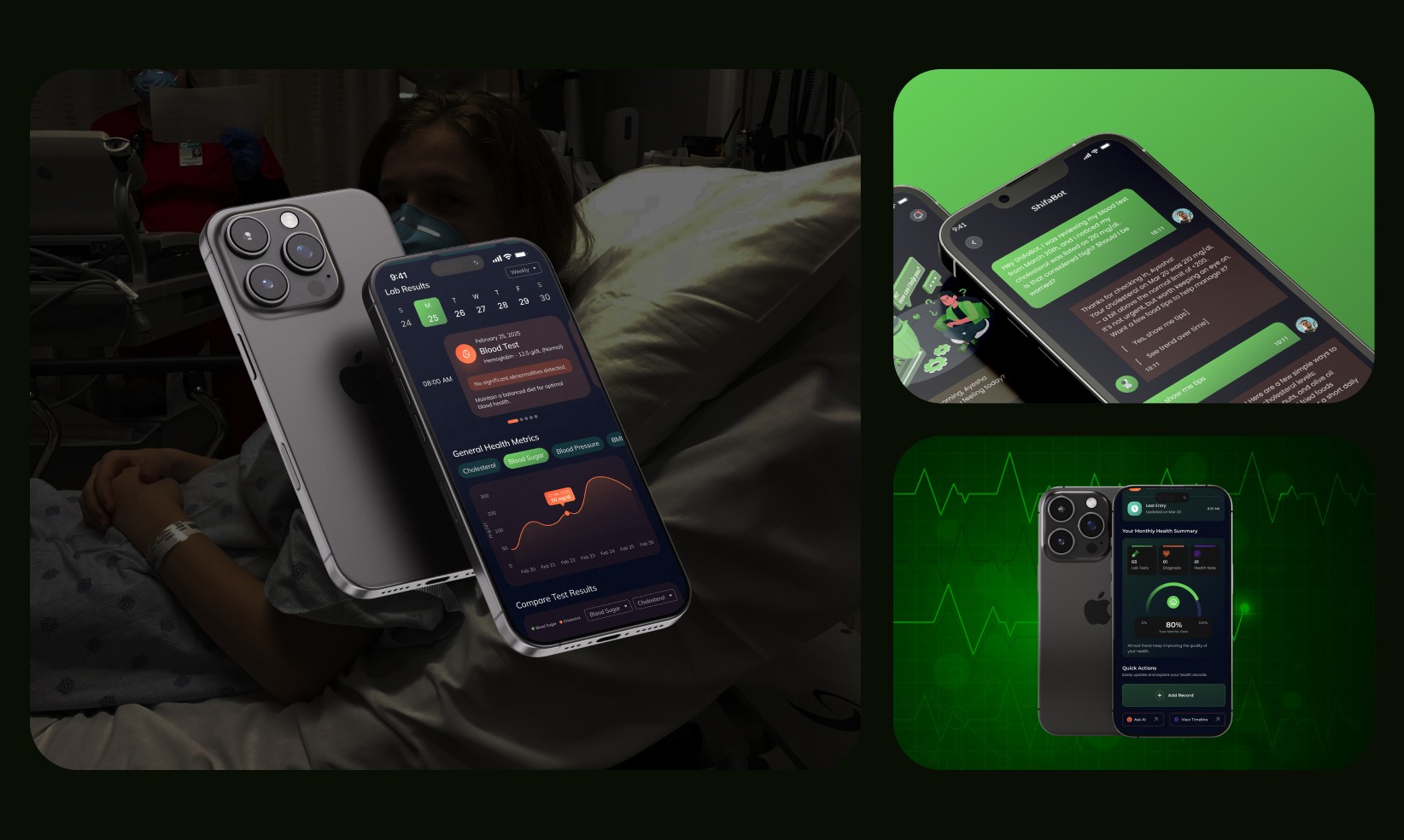
ShifaOne is a mobile-first healthcare experience designed to help patients manage, understand, and trust their medical data. The goal was to create an effortless journey, from uploading lab reports to reviewing AI-assisted diagnoses, while ensuring users feel in control of their health.
The project focused on clarity, empathy, and trust. Every interaction scanning, reviewing, or asking the AI assistant, was designed to feel human and reassuring. By blending functionality with accessibility, ShifaOne transforms complex medical data into something patients can easily understand and engage with.
My Role
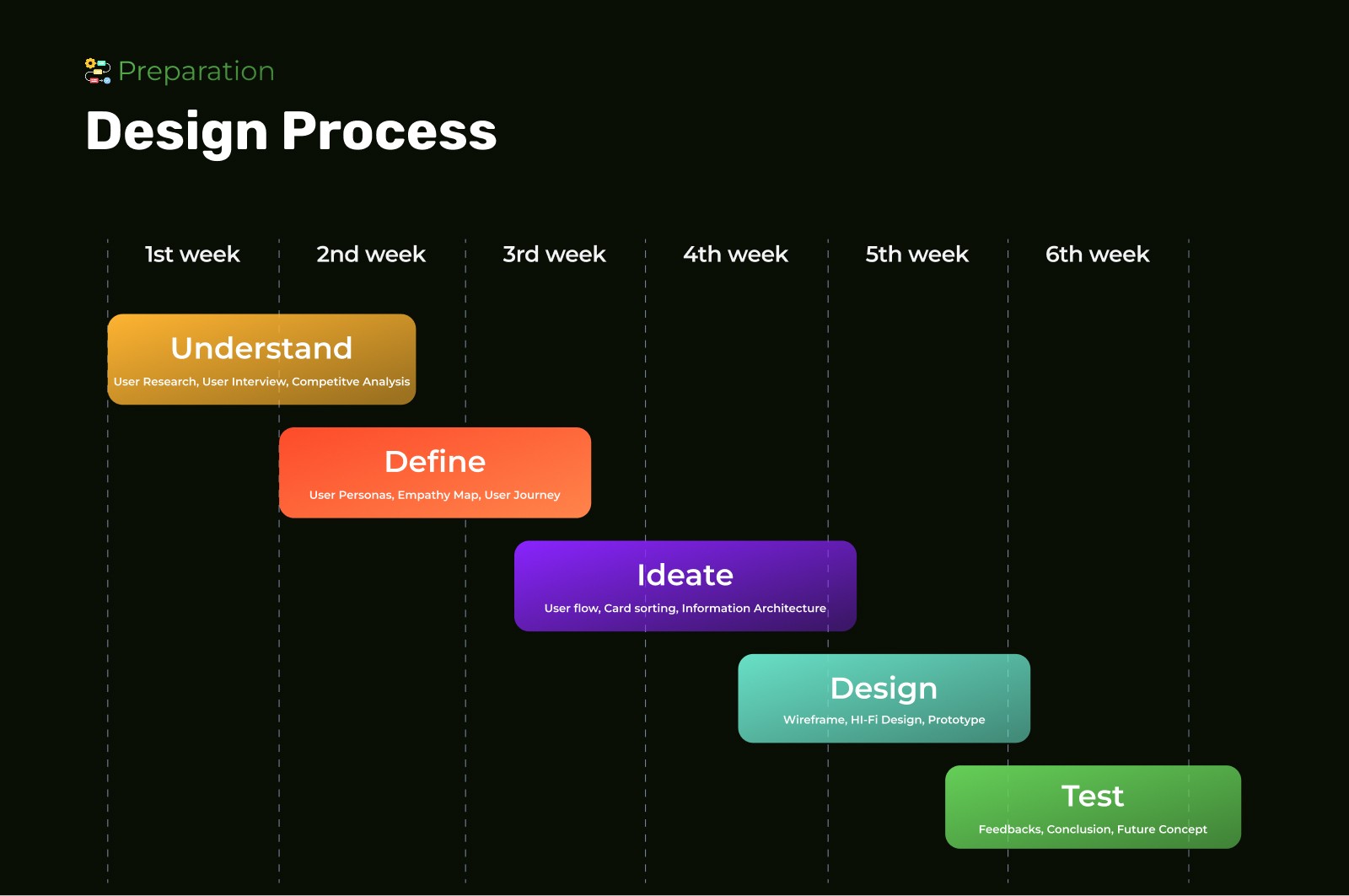
UX Research & Information Architecture
Mobile-first UI/UX Design
Wireframing & Prototyping (Figma)
Design System Creation
Interactive User Flows
Usability Testing
Key Features
Seamless record upload via scan, photo, or manual input
AI-powered diagnosis summaries with editable data review
Combined dashboard for reports, diagnoses, and notes
Smart timeline for health trends and progress tracking
Contextual AI assistant with disclaimer integration
Accessible, mobile-first design with calming color system
Challenges & Solutions
Challenge: Making complex medical data feel easy and non-intimidating
Solution: Designed clear visual hierarchy with simple summaries, color-coded tags, and plain-language explanations.Challenge: Preventing AI misuse or misinterpretation
Solution: Added visible disclaimers, structured response tone, and user control before diagnosis generation.Challenge: Maintaining consistency across multiple modules (Diary, Timeline, Diagnosis)
Solution: Built a unified design system for icons, spacing, and interactive states in Figma.
Takeaways
ShifaOne reinforced how thoughtful UX can turn something clinical into something compassionate. By focusing on trust, empathy, and accessibility, the design made health tracking less intimidating and more empowering. The project proved that design clarity is just as important as medical accuracy when creating digital healthcare products.
More Project
</
>